
Presented at the 2011 CHARGE Syndrome Conference by: Tim Hartshorne, Ph.D., Central Michigan University and Nancy Salem-Hartshorne, Ph.D., Delta College
Presenter Information:
Dr. Tim Hartshorne is a professor of psychology, specialized in school psychology, at Central Michigan University. He has been researching and presenting about CHARGE syndrome since 1993, motivated by the birth of his son with CHARGE in 1989. His particular interest is in understanding the challenging behavior exhibited by many individuals with CHARGE. He is the grant holder for DeafBlind Central: Michigan’s Training and Resource Project.
Dr. Nancy Salem-Hartshorne is an instructor at Delta College located in central Michigan. Her research has focused on developmental outcomes for individuals with CHARGE syndrome. Her published work has focused on cognitive and adaptive behavior skills in CHARGE, as well as on adolescent and adult medical and life issues. She has a son, Jacob, aged 22, who has CHARGE syndrome.
Presentation Abstract:
Many parents worry about where their child will live when he or she grows up. This presentation reviews the major choices and then proposes a four step process for making a decision: identify desired life experiences & goals, determine the pattern and intensity of support needs, develop an individualized plan, and monitor progress. These steps will be illustrated by the presenters’ personal experience with their son.
Primary Alternatives
- Live with parents in parents’ home
- Live in group home or institution
- Live independently with supports
Remaining with Parents
- Familiar and comfortable
- Parents can keep the person safe
- Parents can advocate
- Costs
- What happens when parents are incapacitated?
- Possible restrictions to developing independent living skills
- Restrictions to parents’ freedom
Group Home
- A safe, comfortable environment
- Able to live with peers
- Little choice regarding structure and amenities
- Costs
- No choice in who you live with
- Restrictions on freedom based on house rules
- May tend to community isolation
Own Home
- Maximum freedom in how to live
- Staff totally focused on one individual
- Can design the home to meet the preferences of the one person living there.
- Costs
- May be expensive to establish
- Must rely on staff to insure community inclusion
- Issues related to quality of staff
- Loneliness?
How to Decide?
- The availability of local models
- Parent instinct to protect and keep close
- Guilt factors
- What would the person prefer? How to know?
- General philosophy and beliefs
Support Plan Development
Four Component Process:
- Identify desired Life Experiences & Goals
- Determine Pattern & Intensity of Support Needs
- Develop Individualized Plan
- Monitor Progress
1. Identify desired life experiences and goals
Person Centered Planning
- A tool for advocacy
- A tool for inclusion
- A tool for planning and setting the path
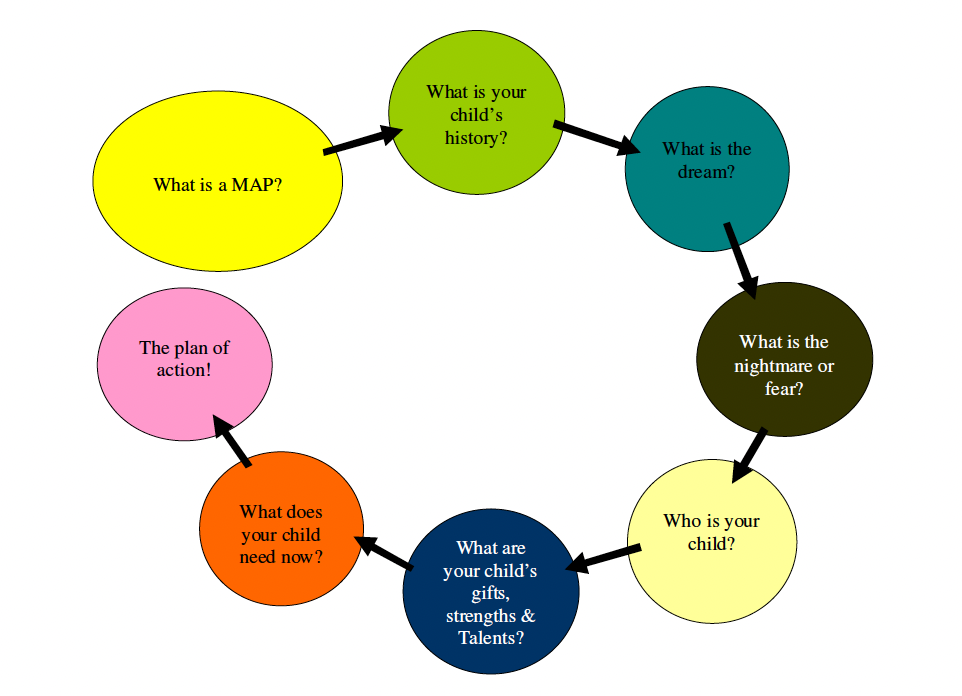
Planning
- Traditional Planning
- Formal assessments
- Deficiencies and needs
- Professional teams, roles and reports
- Person Centered
- Discovering and learning who the person really is
- Finding capacities and gifts in the other person
- Using family and friends and other connections
Goals of Person Centered Planning
- Being Present And Participating In Community Life
- Gaining And Maintaining Satisfying Relationships
- Expressing Preferences And Making Choices
- Continuing To Develop Personal Competencies
- Fulfilling Respected Roles And Living With Dignity
- Making Action Plans
- What is this person’s history and your history with this person?
- What are your dreams for this person?
- What are your nightmares for this person?
- Who is this person (one or two words/phrases)
- What are this person’s strengths?
- What are this person’s needs?
- What can we do to plan for the future this person wants?
Action Plan
- Move toward the dream
- What would a perfect day be like for this person?
- Who is willing and able to support?
A Goal for Jacob
- Jacob will live in his own home
- A consistent goal from pre-Kindergarten
- But how much support would he need?
Guiding Philosophy
The best (effective & efficient) way to meet people’s needs is by supporting them in the life they want!
2. Determine Pattern & Intensity of Support Needs
Defining Supports
Resources and strategies that promote the interests and welfare of individuals and that result in:
- Enhanced personal independence and productivity
- Greater participation in society
- Increased community integration
- Improved quality of life
- Intensity of Supports
- The range could be from mostly independent to requiring 24-7 support
- Areas to consider
- Home living (love)
- Community living (friendship)
- Lifelong learning (work)
- Employment (work)
- Health and safety (love)
- Social activities (friendship)
- Protection and advocacy (love)
Supports Intensity Scale
- The SIS is a planning tool developed by the American Association on Intellectual and Developmental Disabilities to assess needs of people with intellectual and developmental disabilities
What does the SIS offer?
- Direct, reliable, and valid measure of an individual’s support needs across life areas.
- Evaluation of the impact of significant medical and behavioral conditions.
- Profile of an individual’s support needs in comparison to a national sample of adults with developmental disabilities.
- Process/tool for assisting in planning of an individual’s supports needs.
- Useful tool to be included in individualized resource allocation.
3. Develop Individualized Plan
Developing the Plan for Jacob
- Identifying funding
- Finding the right house
- Remodeling the house
- Finding the right staff
Identifying Funding
- In Michigan key agency is Community Mental Health
- Jacob already received respite care funding from CMH
- Availability of Habilitation Waiver
- Intensity of needed supports
- High
Finding the Right House
- The house next door!
- Owned by an elderly lady
- Same floor plan as our main floor
- We can keep an eye on things
Remodeling the house
- Meeting to brainstorm fixing up Jacob’s house
- Finding contractors who
- Believe in the project
- Are willing to find ways to save money
- Volunteers
- Donations
Finding the Right Staff
- “Jacob was the best teacher I had at CMU.”
- CMU students from many departments
- We hire and train and support
- Money comes from CMH
- Paid through a fiscal intermediary
4. Monitor Progress
- Is Jacob happy in his home?
- Does Jacob continue to make progress with independence?
- Is Jacob progressing in terms of pre-vocational skills?
- Does Jacob continue to experience community inclusion?
Parting Thoughts
- The ideal living situation varies from person to person and family to family
- Going through the four steps can help to ensure a good future
1. Identify desired Life Experiences & Goals
2. Determine Pattern & Intensity of Support Needs
3. Develop Individualized Plan
4. Monitor Progress
