
Where do we begin? And WHY?
“Not teaching a child about sexuality and how to express natural urges in a safe and appropriate manner
denies a big part of what is essentially human.” (Moss & Blaha, 2001).
Embarrassing moment or teaching moment
- Children with DB and DD do NOT learn incidentally about sexuality issues.
Importance?
- Multiple studies indicate that children who are Deaf know less about sexuality issues than hearing peers (Getch et al., 2011)
- 2.2 times higher for sexual abuse
- Often repeated and will go unreported (Stinson, Christian, & Dotson, 2002)
References: National Center for Abuse and Neglect
Sexual Abuse Research
Males
- About 13.9% vs. 3.7% reported lifetime sexual violence
- 32% victims of sexual assault
Females
- 26.6% vs. 12.4% experienced lifetime sexual violence
- Abuse estimated to range from 33% to 83%
- 83% victims of sexual assault (less than half seek treatment or legal support)
References: American Journal of Preventive Medicine; Journal of Interpersonal Violence 2000, 15 (1); Stinson, Christian, & Dotson, 2002; Murphy & Elis, 2006
Goals
- Begin teaching EARLY!
- 6 month
- 1 year
- 5 year
- Is the location (environment) appropriate?
Naming Body Parts
- Use daily teaching when appropriate
- Begin Early
- Be Specific
- Recommendations:
- Games: “Is it a boy or a girl?”
- Books, magazine clippings
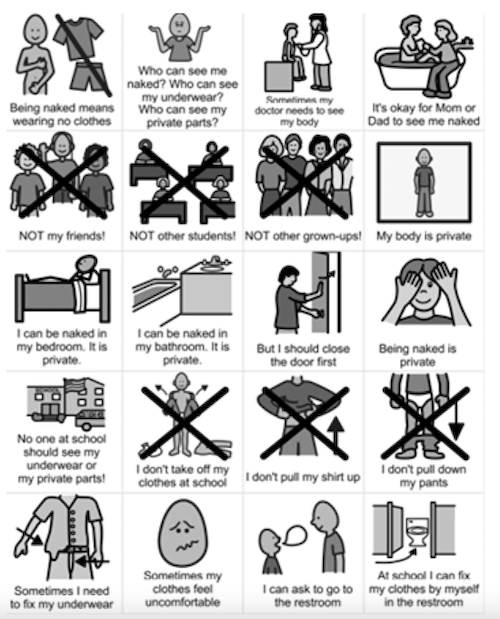 Personal Boundaries
- Establish a pattern of behavior.
- More difficult to change highly established behaviors
- Identify examples of safe and not safe hands
- Model Modesty
- REQUIRE modesty from teachers, physicians, etc.
- Opportunities for practice
- Teach for the environment
Establishing Boundaries
- State specific people who can see the child without clothing
- Who can assist with baths?
- Examples of private and not‐private
- Prep for physical examinations
Safe Hands
- Use a consistent vocabulary
- Forewarn your educators
- Perseverative touch; redirect when able and address with a formal behavior plan
Hugging Social Story
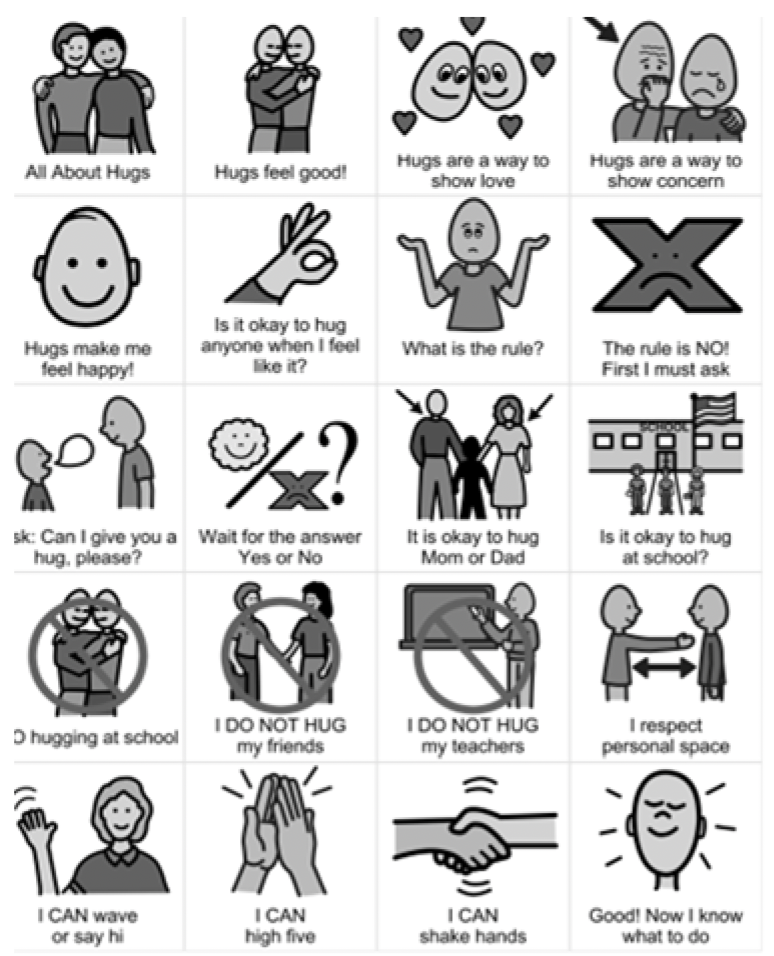
Kissing Social Story
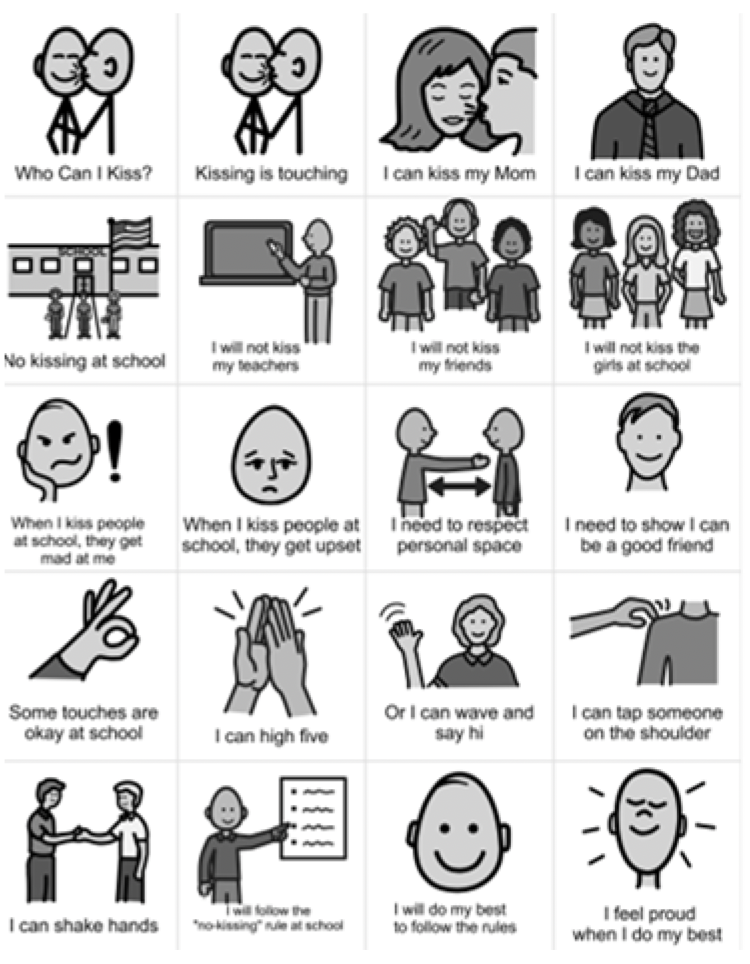
Personal Boundaries
- How do introduce yourself to others
- Name
- Place out hand
- “Count down” handshake
Hygiene and Personal Care
“A critical component of social and sexual maturity is attaining independence in basic self‐care tasks.” ‐AAP
- Intervention Options: direct instruction, formalized cues, and reinforcement system
- Clothing: Acceptable to peers and socially appropriate?
- Add to your child’s yearly goals at school
Showering/Bathing
- Assistance‐ Did you ask for permission?
- Use of soap
- Forgotten parts
- Neck
- Back
- Feet
- Caring for Stoma site and other medical necessities
Hygiene Interventions
“First Impressions”
- Male and Female Versions
- Hygiene
- Importance
- Shower, Shampoo, Soap
- “5‐minute shower”
- Toilet Hygiene
- Self‐exams (testicular and breast)
Menstruation
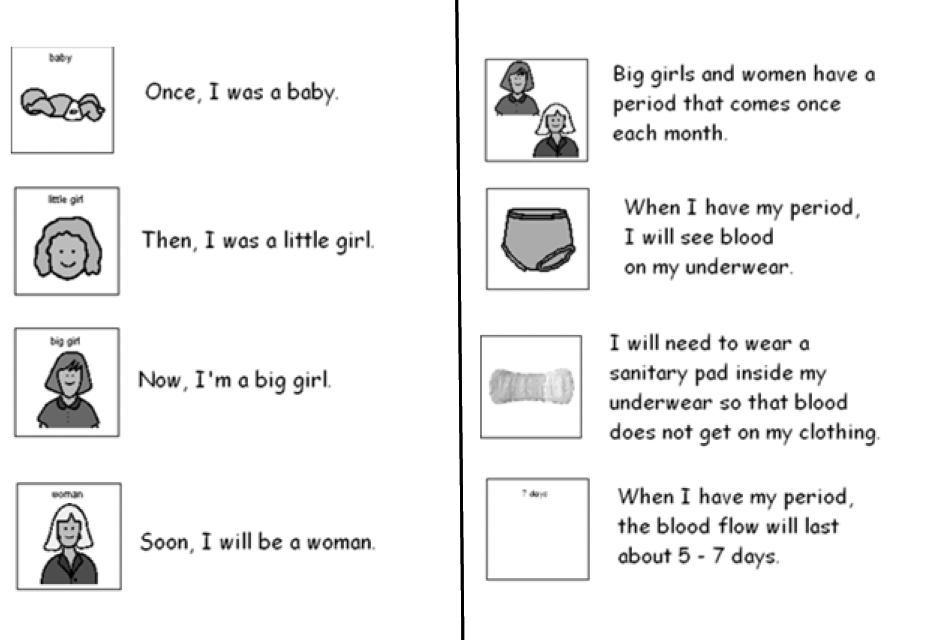
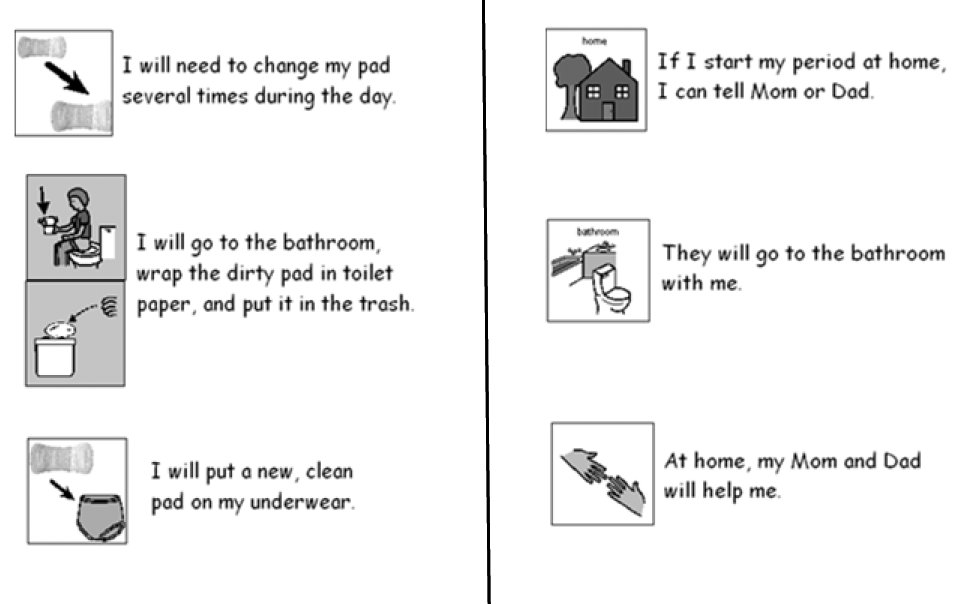
- Sanitary Pad Compliance
- Practice, Practice, Practice!
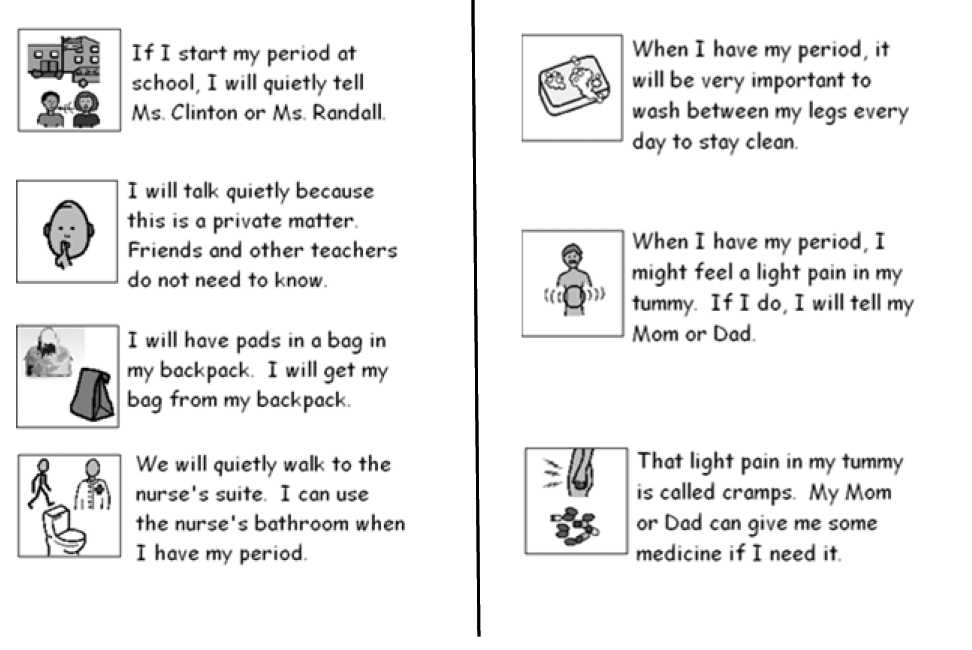
- Visual scripts (placement and changing)
- Reinforcement
- Hygiene
- Choices
- Sanitary pad type
- Add to IEP
- Prepping for School
- Medications
- Keep record of periods
Examinations
• The American Academy of Pediatrics supports having a trusted caregiver present for examinations if the individual provides consent to do so (Murphy & Ellis, 2006)
Birth Control
- Discuss questions and concerns with your child’s physician
- Caution: antiepileptic medications decrease the effectiveness of oral and implanted contraceptives (Murphy & Elis, 2006).
- Injectable contraceptive can effectively minimize or eliminate menstrual flow
- Prolonged use linked to bone density loss in healthy adolescent females, which may not reverse completely after discontinuation of the medication (Murphy & Elis, 2006)
Masturbation
- Prerequisite Skill #1:
- Does your child understand the concept of “wait”?
- “Later when we get home”
- Does your child understand the concept of “wait”?
- Prerequisite Skill #2:
- Teach public versus private
-
LOCATION, LOCATION, LOCATION
-
Redirects; Use of a timer
-
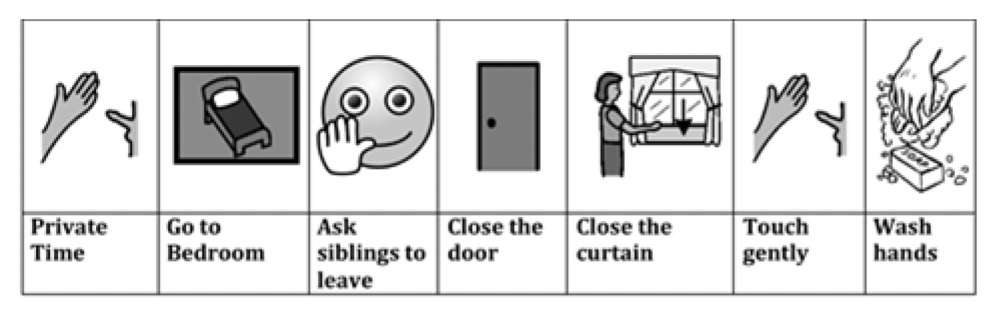
Social Story; Visual Script
-
Reinforcement Systems!
-
Be cautious of items used for humping
-
Gentle touch
-
-
Video Modeling:
-
Males: “Hand Made Love: A guide…”
-
Females: “Finger Tips: A guide…”
(Diverse City Press: Diverse‐city.com)
-
Sex Education
- Education and intervention for sexuality allows the individual to knowledgeable to make informed decisions to promote sexual identity and sexual safety (Getch et al, 2001)
- Consult with your IEP team early
Final Notes
- Begin education early
- Physicians and educators must know that sexuality education is primary part of your child’s goals
- National Consortium on DB: “Intro to Sexuality Edu.”
- Instructional strategies may require the use of concrete materials and tactual exploration.
